Accessibility is part of the Dreamforce experience. Dreamforce brings together a huge community, and creating an experience where more people can participate means thinking about accessibility across the entire attendee journey — from getting around campus and attending sessions to grabbing lunch, taking an exam, or heading to Dreamfest.

Here are 10 ways Dreamforce is supporting disabled attendees and attendees with accessibility needs in 2026.

1. Making it easier to navigate Dreamforce

  • Step-free pathways, ramps, and elevators throughout the venue
  • Accessible entrances across Moscone and Yerba Buena Theatre
  • Hard path between Moscone North and South
  • Low-pile turf on Howard Street
  • Interactive map directions within the Salesforce Event app, including text-to-speech

2. Offering on-demand visual assistance with Aira

  • Blind and low-vision attendees can use the Aira app at no cost during Dreamforce
  • Connects attendees with trained remote visual interpreters for real-time assistance
  • Pair with the availability of trained sighted guides for in-person navigation support

3. Putting accessibility help front and center

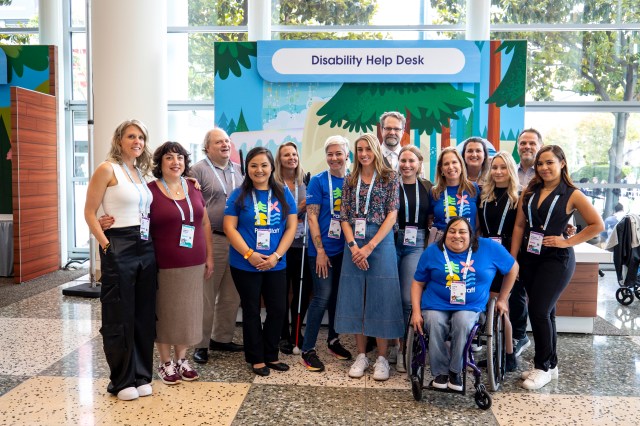
  • Located in Moscone West, Level 1
  • Help with accommodations, priority seating, guided tours, mobility scooters, and other needs
  • Guided tours available on request
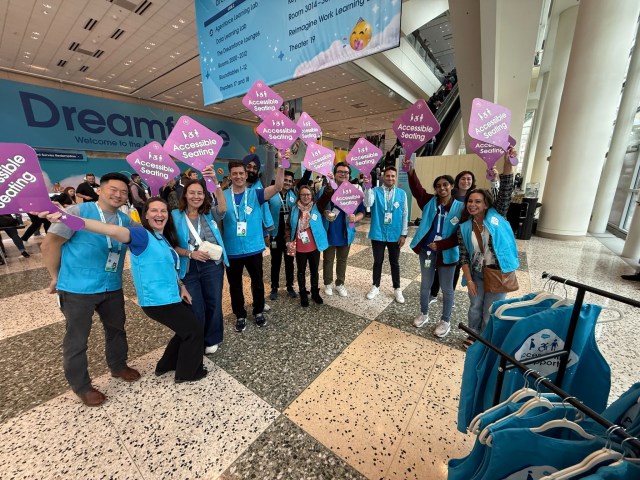
  • Trained “Vesties” in blue vests available throughout campus to provide support and navigation

4. Creating more options for mobility and movement

  • Mobility-device charging stations across campus
  • Motorized scooters available through the Disability Help Desk
  • Accessible registration line with low-height counter
  • Option to bypass lines for people who cannot stand for extended periods
  • Accessible shuttles that accommodate wheelchairs, scooters, and other mobility devices

5. Building accessible seating into the experience

  • Accessible seating prioritized in breakout sessions
  • Reserved accommodation seating at keynotes
  • Priority seating in Dreampark
  • Accessible viewing platform at Dreamfest

6. Expanding captions and sign language access

  • English captions displayed in keynote rooms
  • AI-generated English captions for breakout sessions
  • In larger sessions, captions appear on in-room monitors
  • In smaller sessions, attendees can scan a QR code to view captions on their own device
  • ASL interpretation at the Broadcast Theater and for individual sessions upon request

7. Creating spaces to rest and recharge

  • Three quiet rooms across campus for attendees who need to decompress
  • Areas of rest and priority seating
  • Tie this to the reality that Dreamforce is a large, high-energy event and different attendees may need different ways to participate comfortably

8. Making food, restrooms, and everyday essentials more inclusive

  • Accessible restroom stalls throughout Moscone
  • All-gender restroom options
  • Low-height food and beverage counters
  • Vegetarian and vegan meals
  • GF, DF, and NF food labeling
  • Pre-ordered meal pickup
  • Private rooms for pumping and milk expression

9. Supporting service animals and individual accommodation needs

  • Service animals welcome throughout campus
  • Relief areas and water stations
  • Hotel-room accommodation requests through Dreamforce housing
  • Disability Help Desk support for attendees who need additional assistance

10. Extending accessibility to exams and Dreamfest

  • Certification exam accommodations available on a case-by-case basis, including extended time, assistive technology, and separate testing environments
  • Accessible Dreamfest entry and viewing platform
  • Companions accompanying a disabled attendee to the Dreamfest viewing platform don’t need a separate platform ticket

Know where to go for help

Explore the Accessibility tab in the Salesforce Event app for the latest information and make the Disability Help Desk in Moscone West, Level 1 the go-to resource for questions or assistance.

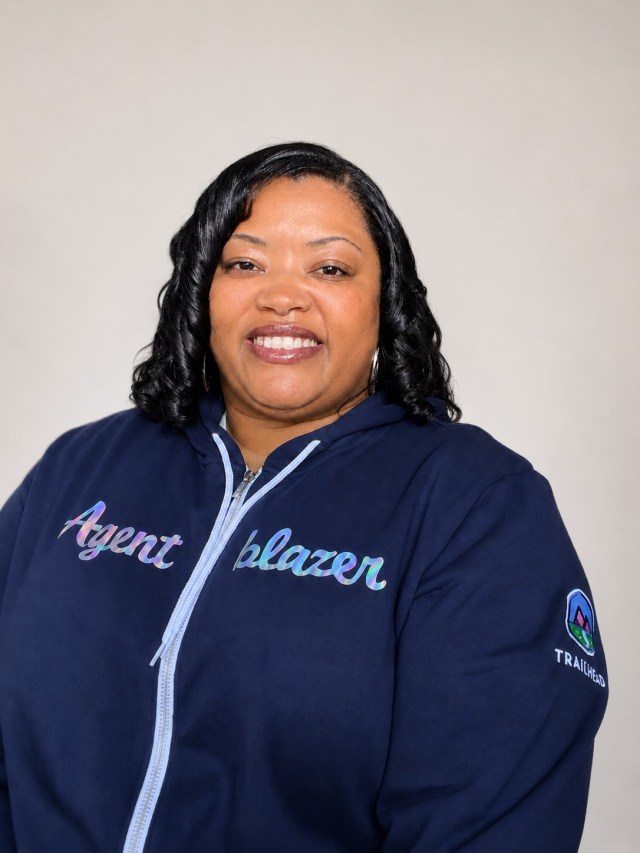
When Lamonica Hayes connected with the Center for Independent Living (CIL), she was rebuilding her confidence after brain surgery and looking to re-enter the workforce. She’s also a parent to a child with autism, so accessible training and flexible career opportunities are especially important to her. 

Shortly after Lamonica started working with the CIL, they introduced her to Salesforce Workforce Navigators (WFN) and she enrolled in an AI-focused training program offered through a partnership between the two organizations. That decision would open doors to a future that Lamonica hadn’t yet imagined. 

“I was hesitant at first,” she recalled. “But after receiving some encouragement, I thought, ‘Okay, I’ll give it a try.’ It turned out to be amazing.” 

Through the program, Lamonica learned the fundamentals of AI, built her first AI-powered chatbot, earned her Agentblazer Champion badge, strengthened her resume and LinkedIn profile, and began exploring careers in the Salesforce ecosystem. For Lamonica, the program has also led to leadership opportunities and increased confidence in navigating her career path. 

“I’ve had to learn, unlearn, and relearn how to retain information,” she said. “Not giving up on myself, but giving grace because there’s a lot to learn about technology but I’m grateful it’s a tool to support different types of brains and having that mentorship—that’s what I loved about the program.”

Lamonica is one of multiple participants showing what happens when people with disabilities have access to emerging technology, mentorship, and a supportive community. Across the first AI-focused cohort, participants didn’t just gain technical skills—they discovered they belonged in the future of AI.

Expanding Access to AI

Stories like Lamonica’s are exactly why WFN and the CIL are expanding their partnership.

For several years, the organizations have worked together to connect people with disabilities to career coaching, mentorship, and workforce development opportunities. Now, as AI rapidly transforms every industry, the partnership is evolving to ensure disability communities have access to AI education from the very beginning.

The program combines weekly instructor-led AI classes, Salesforce Trailhead, one-on-one mentorship, interview preparation, and interactive learning with Agentforce—the AI ​​agent platform from Salesforce that delivers 24/7 autonomous support at enterprise scale.

For Lucia Rios, Workforce Navigators Senior Analyst at Salesforce, the goal goes beyond teaching people how to use AI tools like agents.

“People are already using ChatGPT, Claude, and other AI tools like Agentforce,” she said. “But they don’t always understand what’s happening behind the scenes. Through these classes, participants learn the fundamentals of AI and AI agents together, ask questions, build agents, and decide where they want to take their careers next.”

Just as important was learning together.

“We could break down large, confusing topics together,” Lucia said. “Everyone cheered each other on. It was challenging, especially for participants without technical backgrounds, but they kept showing up and celebrating every milestone.”

That collaborative environment helped transform uncertainty into confidence—one badge, one conversation, and one breakthrough at a time. Throughout the program, veterans, career changers, and job seekers with a range of disabilities discovered something they hadn’t expected: that they belong in the world of emerging technologies. For many participants, that realization was even more meaningful than earning badges. 

“At first, I had some concerns about how AI would impact people with disabilities,” participant Alfonso Ramirez said. “Now, I’ve learned that we can use AI to help us with all kinds of things, like brainstorming ideas, organizing projects, and exploring employment opportunities. It’s like having a partner that helps you move forward.” 

Alex Braithwaite found confidence through a different part of the program: mentorship. 

“For me, connecting with a mentor from Salesforce was the best part,” he said. “It helped prove to myself that I could get through the modules and keep learning.” 

For Air Force veteran Elisha Silvas, the program completely shifted what she imagined for her career path. After transitioning away from physically demanding work because of injuries, she joined the cohort with little technical experience. Today, she’s pursuing Salesforce Administrator certification and continuing to learn through Trailhead. 

“I feel seen by Salesforce and Workforce Navigators—seen for my curiosity and eagerness to learn,” she said. 

Why Disability Perspectives Matter in AI

For Berkeley CIL, the opportunity extends far beyond workforce development.

Laurence Carew, Computer Training and Technology Support Coordinator for the CIL, believes AI has the potential to become one of the most powerful accessibility tools available.

“I hope people start to look at AI as an accessibility tool and a necessity,” he said. “Whether it’s summarizing information, helping someone stay focused, or making content easier to understand, AI is doing many of the things the disability community has been requesting for years.”

The CIL is already putting that vision into practice through projects like Lilly, an AI-powered intake system, and a caregiver matching platform that uses AI to recommend the best pairing between clients and caregivers. 

Those projects reflect a larger truth: people with disabilities are helping build what’s next when it comes to AI, and it’s critical to ensure that they are included in the conversation from the beginning. 

“People with disabilities have historically been left out of conversations around emerging technology,” said Camiel Hayes, the CIL’s Youth and Vocational Program Manager. “It’s even more important that people with disabilities can shape this technology and contribute their lived experiences, because that’s how innovation is driven.”

Looking Ahead

As AI and AI agents reshape the future of work, partnerships like the one between Workforce Navigators and Center for Independent Living ensure that people with disabilities can help drive the direction of AI development. That’s why Workforce Navigators plans to expand this model to additional nonprofit partners, help more participants become Agentblazer Champions, and continue preparing job seekers for an AI-powered workforce.

“Our hope is that participants will continue learning, growing, and using these experiences throughout their careers,” said Lucia. 

After all, the future of AI includes everyone—and this partnership is helping ensure people with disabilities are part of building it from the very beginning.

What if the future of AI is shaped not just by technology, but by the people who build it?

Disability Pride Month is a time to celebrate the creativity, resilience, and innovation that people with disabilities bring to our workplaces and communities. It also serves as a reminder that the future of technology should be shaped by the unique perspectives and lived experiences that reflect the world it serves.

That future is already taking shape. Through Salesforce Workforce Navigators, learners have participated in five years of mentorship, formed 143 mentorship matches, earned 511 Salesforce certifications, and contributed 893 Volunteer Time Off (VTO) hours back to their communities (as of February 2026). These milestones reflect more than program growth—they represent people building skills, supporting one another, and expanding opportunities for others.

As artificial intelligence transforms the way we learn, work, and solve problems, people with disabilities have an important role to play—not only as users of AI, but as the innovators, leaders, and creators helping define what’s next.

At Salesforce, we’re committed to expanding access to the skills and opportunities that make that possible. Through Salesforce Workforce Navigators, learners can build AI and digital skills, explore emerging technologies like Agentforce, and gain the confidence to participate in an AI-powered future.

Building the Skills for an AI-Powered World

AI is quickly becoming part of everyday work, making AI fluency an essential skill across industries—not just for developers or technical specialists. Understanding how to use AI responsibly, evaluate its output, and combine it with uniquely human strengths like creativity and critical thinking will become increasingly valuable.

Salesforce Workforce Navigators helps learners build these capabilities through accessible, flexible learning experiences focused on Salesforce, Agentforce, and other emerging technologies. Whether someone is beginning a new career, exploring AI for the first time, or expanding their existing knowledge, the program provides practical opportunities to develop in-demand skills at their own pace.

Making Learning More Accessible for Everyone

Creating opportunities begins with creating access.

Workforce Navigators is designed to remove barriers that can prevent people from developing new skills. Through self-paced learning powered by Trailhead, Salesforce’s free online learning platform, participants can learn through bite-sized modules, hands-on challenges, and flexible experiences that fit different learning styles, schedules, and goals.

Combined with accommodations, support services, and an inclusive approach to education, these learning experiences help more people build confidence, strengthen their technical skills, and prepare for a rapidly changing workplace.

Innovation Is Stronger When More Perspectives Are Included

Technology is at its best when it’s built by people with different lived experiences.

People with disabilities bring valuable perspectives that can influence how AI systems are designed, tested, and improved—helping create technology that is more accessible, intuitive, and useful for everyone. As organizations increasingly adopt AI, ensuring that people with disabilities have opportunities to contribute isn’t simply about representation; it’s about building better products and driving better innovation.

Beyond technical training, Workforce Navigators connects learners with mentors, peers, and industry professionals who encourage collaboration, share experiences, and support one another throughout their learning journeys. Together, these connections help cultivate a growing community of AI-ready talent with diverse perspectives and experiences.

Building the Future Together

Creating a more inclusive AI-powered future requires collaboration across employers, educators, nonprofits, and technology leaders.

Through partnerships with organizations across the workforce development ecosystem, Salesforce Workforce Navigators helps expand access to AI education and digital skills while creating more opportunities for learners to grow alongside emerging technologies. By investing in accessible learning and inclusive talent development today, we can help ensure tomorrow’s workforce reflects the communities it serves.

Looking Ahead

Disability Pride Month is ultimately about recognizing that disability is a source of innovation, creativity, and leadership.

As AI continues to reshape the future of work, it’s essential that people with disabilities are empowered to participate and help lead that transformation. By expanding access to AI education, accessible learning experiences, and supportive communities, Salesforce Workforce Navigators is helping create a future where more people can contribute their talents, perspectives, and ideas.

If you’re ready to take the next step, explore Salesforce Workforce Navigators to discover accessible learning opportunities, build in-demand AI and Salesforce skills, and prepare for the future of work.

Liz Choi was searching for a pathway into the Salesforce ecosystem when she joined Blind Institute of Technology (BIT) in 2022.

Instead, she found something much bigger: Accessible training designed to support learners with disabilities through inclusive materials. Assistive technologies. Flexible learning experiences. And a hands-on mentorship from Salesforce professionals that connected her to a community invested in helping her succeed.

“It was great to have the opportunity to connect with people who actually worked at Salesforce and really take advantage of everything they offer through Workforce Navigators,” Choi said.

After completing BIT’s Salesforce Administrator course and earning her certification, Liz entered BIT’s apprenticeship, where she spent more than three years building real-world experience. Along the way, she participated in two versions of the Salesforce Workforce Navigators mentorship program, worked directly with Salesforce professionals, strengthened her interview skills, and expanded her professional network.

Today, Liz holds certifications including Salesforce Administrator, Salesforce Business Analyst, and Agentforce Specialist – and continues pursuing opportunities within the Salesforce ecosystem.

Her story reflects the larger mission behind the partnership between Blind Institute of Technology (BIT) and Salesforce Workforce Navigators: Creating accessible pathways into meaningful technology careers for professionals with disabilities.

Building Accessible Career Pathways Together

Workforce Navigators, a program within Salesforce’s Office of Accessibility, helps expand those opportunities through certification vouchers, accessibility accommodations, mentorship, networking, and career-readiness support.

Blind Institute of Technology (BIT) prepares learners for careers in technology by providing Salesforce training, professional development, and paid apprenticeship opportunities. Students complete a structured learning journey that includes self-paced coursework, intensive live training cohorts, hands-on projects, mentorship, and real-world simulations designed to mirror actual Salesforce environments.

BIT currently offers training for certifications including:

“We don’t just teach to pass the test,” said BIT Academy Director Elliott Natale. “We teach students how to do the job.”

The partnership between BIT and Workforce Navigators is focused on helping professionals with disabilities move from training to employment through accessible education, mentorship, certifications, and real-world experience. Together, the organizations help remove barriers that can make entering the tech workforce difficult, while creating more inclusive pathways into Salesforce careers.

Addressing the Bigger Challenge: Access, Equity, and Employment

Throughout conversations with BIT staff, apprentices, and mentors, one message came through clearly.

“For our community, it’s not a lack of ability — it’s a lack of opportunity,” said Kristy Schenderlein, Vice President of Operations at BIT.

Transportation challenges, inaccessible training environments, hiring bias, and limited professional networks can all make it harder for professionals with disabilities to break into tech careers — even when employers are looking for their skills. 

BIT and Workforce Navigators are working to close those gaps.

Through the mentorship program, apprentices are paired with Salesforce professionals who provide support around resume building, interview preparation, networking, and career exploration within the Salesforce ecosystem.

For Liz Choi, the experience was transformative.

“The mentorship program made me feel confident enough to start putting job applications out there,” she said.

The partnership also helps remove financial barriers through certification vouchers provided by Workforce Navigators.

“The financial support really makes this possible,” Elliott explained.

Beyond certifications, BIT’s paid apprenticeship program helps address another major challenge in tech hiring: the experience gap. Apprentices spend one to two years gaining hands-on experience working on Salesforce administration, accessibility, and consulting projects while building communication, leadership, and workplace readiness skills.

Taylor Sone, BIT’s Apprenticeship Program Manager, said one of the biggest benefits of the mentorship experience is the outside perspective apprentices receive from Salesforce professionals.

“Those who have gone through the career hunting process themselves and landed something within the Salesforce ecosystem are able to provide that direct, recent experience,” Taylor explained.

The competency-based apprenticeship program gives participants practical experience in Salesforce implementations, user training, accessible design, documentation, and consulting work. This helps apprentices build both technical confidence and professional experience before entering the workforce full time. 

Just as important, BIT is focused on making sure people with disabilities (PwD) are an integral part of decisions for AI fluency – such as the launch of AI programs to company-wide implementation efforts. By leveling the playing field for all employees, inclusive communications brings awareness to issues affecting PwD. It is an important reminder that accessibility is an intentional collective effort and can set the standard for an inclusive workplace. 

Why Salesforce Invests in Accessibility — and What Comes Next

One theme surfaced repeatedly throughout the interviews: Salesforce’s commitment to accessibility feels deeply embedded into both its products and its culture.

“Accessibility isn’t just an initiative at Salesforce — it’s the way Salesforce operates,” Schenderlein explained.

That commitment shows up through accessible product design, mentorship opportunities, dedicated accessibility teams, and the work of the Office of Accessibility. For BIT leaders and apprentices alike, it creates confidence that accessibility is a long-term value within the Salesforce ecosystem.

“It’s not just, ‘Here’s what’s new,’” Schenderlein said. “It’s, ‘Here’s what’s new, and we’re bringing everyone with us.’”

BIT is helping apprentices build the skills and confidence they need to navigate these changes within the workplace in the agentic era. That culture of inclusion is helping drive the next phase of the partnership between BIT and Workforce Navigators, including expanded mentorship opportunities, additional certifications, trainings with tools like Agentforce and more pathways into employment for professionals with disabilities.

Combined with BIT’s mentorship and hands-on experience with Agentforce can help apprentices feel more prepared for what’s next. Ultimately, the partnership is about expanding access to opportunity and creating pathways where professionals with disabilities can fully participate, contribute, and thrive.

At the center of the work is a shared belief that accessibility and inclusion make organizations stronger — and that people with disabilities represent an enormous pool of untapped talent. Together, BIT and Workforce Navigators are helping prove that when accessibility is built into education, mentorship, and hiring from the start, it creates stronger opportunities not just for individuals, but for the entire tech industry.

The hardest part of starting a career isn’t always getting the degree. Oftentimes, it’s figuring out what comes after graduation and navigating a transition filled with uncertainty. 

For students with disabilities, it can feel even more complex. As Lucia Rios, Workforce Navigators Senior Analyst at Salesforce puts it: “Students often have strong support systems while they’re in school. But after graduation, those resources can be harder to access. That transition can be intimidating.”

But what if that gap didn’t exist? That’s the idea behind the growing partnership between Salesforce and Lime Connect — a collaboration designed to help students and early-career professionals with disabilities move from education to employment with confidence, support, and real opportunity. And in just under a year, it’s already making a difference.

From Access to Opportunity

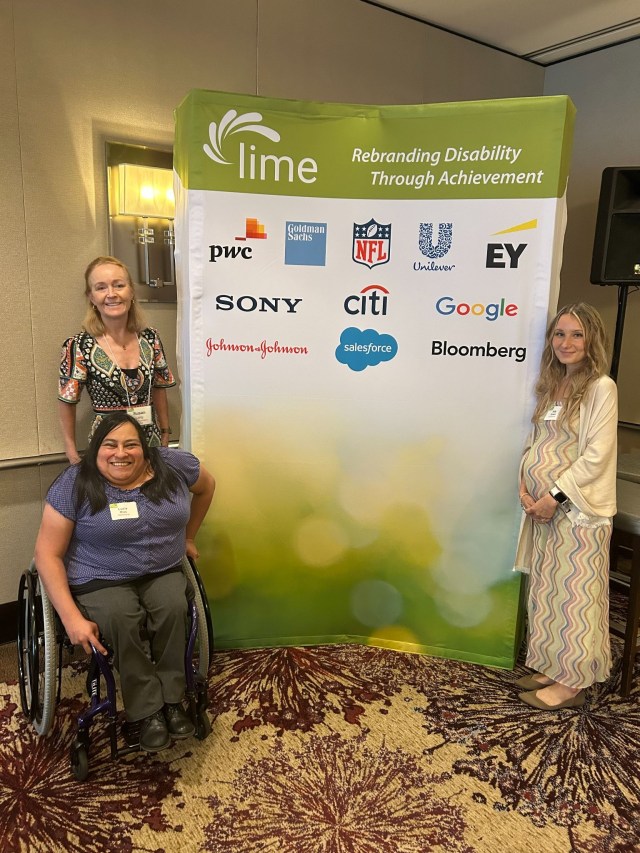
Over the last 20 years, Lime Connect has built a global network of high-achieving students and professionals with disabilities, connecting them with companies committed to inclusive hiring.

“We partner with great companies that people are excited to build careers with,” says Susan Lang, Founding President and CEO of Lime Connect. “Hiring people with disabilities is an important first step. However, the real impact comes from investing in their personal development, growth, and long-term success.”

When Salesforce and Lime Connect began working together, that shared commitment was immediately clear.

“Salesforce is a company we’re proud to work with,” Lang says. “This partnership came together in a matter of weeks. That doesn’t always happen, but Salesforce really walks the walk.”

Today, that partnership spans multiple touchpoints designed to support talent at every stage. Students prepare for their internship and career search through one-on-one coaching, career development webinars, and corporate partner networking opportunities. Lime Connect also offers leadership programs, such as the Lime Connect Fellowship, that supports a select cohort of approximately 25 rising juniors each year. 

The program includes a multi-day symposium in New York City, where Fellows build professional skills, connect directly with leading companies, and identify strategies for communicating their strengths and framing disability as an asset. Fellows also benefit from connections to a broader alumni network and the opportunity to build strong relationships within their peer cohort.

Lime Connect corporate partners also engage with Lime Connect’s experienced professionals and the broader Lime network at every stage of their careers through recruiting and networking events and targeted outreach to participants. Together, these efforts create a more complete pathway — connecting students to opportunity while equipping them with the tools, support, and confidence to succeed once they get there.

Inside the Workforce Navigators Experience

The Workforce Navigators component of the Lime Connect partnership combines broad career exploration with hands-on mentorship and skill-building.

At the center of that experience is mentorship. Participants are paired with Salesforce employees who provide personalized guidance on resumes, interviews, career paths, and professional growth.

Participants feel that impact directly. “It’s really helpful to have that one-on-one relationship with a mentor who can help you identify what you might be interested in,” said participant Ari Drake. “Having people look out for you is huge.”

“My mentor really helped me improve my resume, which was the area I needed the most improvement in,” said Shea Hawkins, who also participated in the Lime Connect partnership with Workforce Navigators. “I already feel stronger.”

Alongside mentorship, participants use Trailhead, Salesforce’s free, self-paced learning platform, to build technical skills and explore new career paths.

“It’s nice that I can do it on my own time,” Drake adds. “Trailhead gives you a taste of different areas to explore and helps inform career decisions.”

Together, mentorship and hands-on learning help participants build confidence, gain direction, and see themselves in the future of work.

That sense of belonging is especially important for those with nonvisible disabilities. “One in six people has a disability, and many of those are invisible,” says Lang. “It’s meaningful to work with a company that truly understands that experience.”

Preparing for the Future of Work

As the workplace evolves, so do the skills needed to succeed.

Through Workforce Navigators, participants are introduced to Salesforce’s vision for the future — including AI and the agentic era, where humans and intelligent systems work together.

“Everyone in the mentorship program gets introduced to AI. It gives them a glimpse into how Salesforce is thinking about the future of work,” says Rios.

Participants don’t just learn about AI concepts like large language models and Agentforce—they also engage with these technologies hands-on.

“Doing different modules, especially about AI, helped me understand areas I might be interested in,” said Hawkins. “It’s also really exciting to see how AI can be used to make technology more accessible for people with disabilities.”

Looking Ahead

As the Salesforce and Lime Connect partnership approaches its one-year anniversary, it continues to demonstrate what’s possible when inclusion is intentional, and when opportunity is paired with action.

What began as a fast-moving collaboration has quickly evolved into a powerful model for supporting early-career professionals with disabilities, combining access, mentorship, and skill-building in a way that creates real, lasting impact. Still, this is just the beginning.

Looking ahead, the focus is on expanding mentorship opportunities, growing program cohorts, deepening Salesforce employees’ volunteer impact, and continuing to invest in participants’ AI and future-ready skills. And for Lime Connect, the momentum is only building.

“It made my year partnering with Salesforce,” says Lang. “We’re very excited about what’s ahead.”

The partnership between the Salesforce Workforce Navigators program and the Center for Independent Living (CIL) is grounded in a shared belief that accessibility innovation must be shaped by — and accountable to — the lived experiences of people with disabilities. For both organizations, inclusion isn’t a program or a project. It’s an ongoing practice rooted in listening, co-creating, and ensuring that technology and employment pathways reflect the realities of the communities they serve.

Together, Salesforce and CIL are working to expand access to tech careers, strengthen disability-inclusive employment practices, and accelerate the development of accessible tools. It’s a partnership built on trust and shared purpose, and one that continues to evolve as both organizations learn from one another.

A Milestone in the Partnership: Disability Mentorship Day

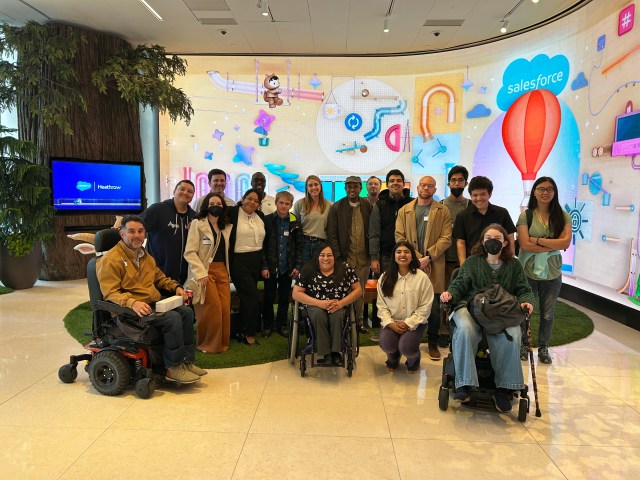
The partnership reached a new milestone during Disability Mentorship Day—an immersive, collaborative event hosted at the Salesforce Tower in San Francisco. It brought together CIL participants, Salesforce accessibility specialists, product designers, and engineers for networking, dialogue, and mentorship.

The day started with participants traveling together from the Ed Roberts Campus to Salesforce Tower, moving through a carefully planned step-free route — meaning a path without stairs or level changes that require steps — designed for accessibility and ease. Clear explanations, seating options, and a welcoming environment signaled, from the moment of arrival, that this was a space built with the disability community in mind, reflecting the Office of Accessibility’s commitment to the disability community’s guiding principle: nothing about us without us.

The Salesforce team greeted the group with warmth, curiosity, and respect so that participants would feel welcome. “It was amazing to see participants feel empowered,” said Adelene Miranda, Community Engagement Program Manager for the CIL. “They saw themselves at Salesforce — especially hearing employees share their own disabilities.”

The event offered a deeper, more grounded understanding of what inclusion looks like when community voice, corporate collaboration, and lived experience intersect. “Everything was packaged perfectly,” said Laurence Carew, computer training and technology support coordinator at the CIL. “We felt like an extended part of the Salesforce community.”

Trailhead Career Workshop and Real-World Experiences Shared

The morning began with an accessible introduction to Salesforce and CRM fundamentals, with Salesforce’s free online learning platform Trailhead presented as an intuitive way to build skills, earn credentials, and gain confidence. From there, Kurt Iobst, Customer Accessibility Advisory Lead at Salesforce, shared his lived experience as a neurodivergent professional, and something shifted.

“When Kurt disclosed being neurodiverse, so many lightbulbs went off,” said Camiel Hayes, The CIL’s Vocational Programs Coordinator. “Seeing themselves reflected in the Salesforce staff was groundbreaking. They realized they belong in these spaces.”

Luis Salazar— a certified Salesforce professional administrator in the office of Accessibility with a disability and an apprentice through the Workforce Navigators program and Blind Institute of Technology— shared his journey into the ecosystem — the challenges, the breakthroughs, and the pride he feels in his work. Participants said hearing his story helped reduce fear and increase clarity around what it takes to pursue certification.His talk reinforced the power of representation in shaping career confidence.

The ‘Ohana Floor Experience

Stepping onto the ‘Ohana Floor was unforgettable. Participants took in panoramic views of San Francisco — a moment of awe that quickly became a moment of empowerment. Staff watched as several participants paused to take everything in. It was a reminder that physical environments can powerfully shape confidence and aspiration.

“The Salesforce Tower is amazing — the views, the workspace, the way everyone collaborates,” said CIL participant Miles Soohoo. 

“I didn’t know what to expect, since it was my first time inside the tower,” said participant Bryan Reed from CIL. “But it was calm and chill — I could see myself working in a place like Salesforce.” 

Salesforce designs its workplaces to be accessible, inclusive, and welcoming for everyone. Through initiatives like the Real Estate Accessibility Awareness Project, Salesforce evaluates and documents accessibility features across global offices — from transportation access and building entry to interior elements like automatic doors, elevators, accessible restrooms, and wheelchair-reserved areas. 

Offices also include supportive amenities such as quiet and mindfulness spaces, assisted listening devices, parents’ rooms, and flexible layouts that reduce sensory overload. By transparently sharing this information on office location pages, Salesforce helps employees and visitors plan ahead and experience in-person spaces with greater comfort, independence, and confidence.

Looking Ahead: Continuing the Work Together

This event didn’t just showcase what Salesforce is building as a leader in accessibility — it demonstrated what becomes possible when community advocates and product creators learn from one another, push one another, and commit to a shared vision of inclusion.

The partnership between Salesforce and CIL continues to grow, guided by the belief that accessibility isn’t a feature to be built on — it’s a core part of the foundation. Together, both organizations are shaping a future where technology is not only functional, but empowering for all — informed by the voices and lived experiences of the disability community, in line with the principle nothing about us without us

Beyond making workplaces more accessible, Salesforce is also expanding access to the agentic skills needed to thrive in modern professional environments, inviting everyone to start learning for free on Trailhead.

When Travis McNair started planning a career change away from retail, he initially wanted to study medicine. But everything shifted after a series of life-changing events, including his father becoming seriously ill and passing away, and him and his fiancée welcoming their new son. Afterward, Travis needed a path that offered stability, flexibility, and a future he could build for his family.

He discovered Salesforce while exploring new career options and began teaching himself through Trailhead, the Salesforce free learning platform. However, self-paced learning proved tough to sustain — especially as someone with Attention Deficit Disorder, balancing work, caregiving, and parenting.

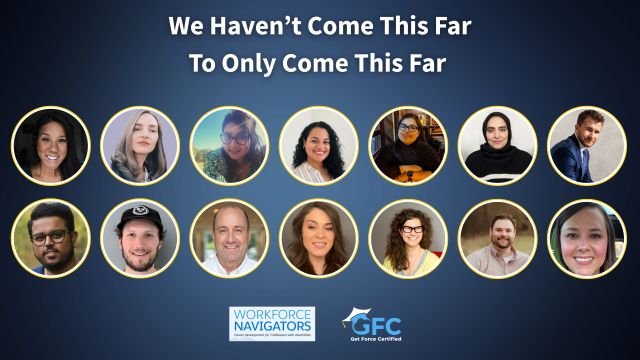
One day, a LinkedIn post caught his eye: a scholarship for the Get Force Certified Salesforce Administrator Academy, founded by former Salesforce Solution Engineer Dave Massey. The post mentioned mentorship, structure, and community — exactly what Travis had been missing. He applied, was accepted, and within months, his career and confidence were transformed.

Travis is part of a growing movement shaped by Workforce Navigators — an initiative that helps professionals with disabilities gain in-demand Salesforce skills — and by Get Force Certified, a program designed to meet neurodivergent learners where they are and prepare them for meaningful careers in the Salesforce ecosystem.

Breaking Down Barriers: The Power of Partnership

Workforce Navigators offers mentorships, accommodations, and scholarships that create pathways for disabled and neurodivergent professionals to build confidence and find meaningful employment in the Salesforce ecosystem.

Get Force Certified is a program founded by Salesforce Solution Engineer turned entrepreneur, Dave Massey, after experiencing his own transformation — moving from the tourism industry to a Salesforce career — and realizing how much structured support and community could help others make the same leap. It offers a 10-week, guided training experience that blends Salesforce technical learning with soft skills, mentorship, and career readiness. 

Through the scholarship, learners like Travis receive full tuition coverage for the 10-week program, along with exam vouchers, personalized mentorship from Salesforce employees, and ongoing career coaching. Together, Salesforce and Get Force Certified are opening doors for individuals who might otherwise have been left out of traditional tech training pathways.

A Program Built for All Kinds of Thinkers

Get Force Certified stands out because it makes space for neurodivergence, recognizing the unique and varied ways that people think, process information, and engage with learning. The program offers multiple content formats (video, audio, written), clear structure, and small, collaborative cohorts that provide accountability and connection.

“It’s not about your degree or background,” Dave explains. “It’s about grit, communication, and the willingness to learn. Salesforce is logical and accessible — what people need is confidence and strategy.”

Salesforce mentors provide one-on-one support beyond certification, helping graduates apply new skills and navigate job searches. The scholarship doesn’t just fund a course, it builds a community that sustains learners long after graduation.

Travis’s Journey From Retail to Salesforce Admin

After beginning the Get Force Certified program, everything accelerated for Travis. The 10-week program combined technical lessons with personal development workshops, mock interviews, and community check-ins. “It wasn’t just about learning Salesforce — it was about learning how to thrive in a career,” Travis explains. “We practiced communication skills, built LinkedIn profiles, and learned how to network.”

Just 24 hours after completing the program, Travis passed his Salesforce Administrator exam. Within six weeks, he landed a full-time role as a Salesforce Admin and Trainer at a company that provides hybrid work, better pay, and flexibility to support his young family.

“I’ve doubled my income,” he says. “I can be there for my son. I went from feeling stuck to feeling unstoppable.”

Another Success Story: Jeanette’s Confidence Boost

For Jeanette Pavkov, the Workforce Navigators scholarship offered a chance to grow within her existing Salesforce role. Jeanette works as an administrator for a John Deere dealership and joined the March 2025 Get Force Certified cohort.

“I already worked in Salesforce, but I wanted to truly understand it,” she explains. “This program gave me confidence and ownership over my role.” Jeanette passed her certification just a few weeks after her program ended and quickly applied what she learned to streamline sales processes and improve reporting.

Beyond the skills, Jeanette says the program’s community made a lasting impact. “We were doing life together. Studying together. Celebrating every win. Even now, we still check in and help each other.” She continues to work with her Salesforce mentor, exploring how to grow her expertise in AI and Agentforce.

Inclusion That Transforms 

For participants, the program isn’t just about passing an exam — it’s about transformation. Many learners come in doubting whether they belong in tech. They leave with certifications, job offers, and a sense of community.

“When you empower someone to believe in themselves, that changes everything — for them, their families, and their communities,” Dave says. “We’re not focused on numbers or quotas. This is about people.”

The ripple effect is already visible. Graduates like Travis and Jeanette are now mentoring others, advocating for accessibility in their workplaces, and inspiring more learners to take their first step into the Salesforce ecosystem.

Looking Ahead — Expanding the Impact

The success of the scholarship is only the beginning for Get Force Certified. Dave is developing a Wayfinder Program, a 12-month experience that guides participants from certification through advanced skills and job search strategy, supporting them all the way to sustained career success.

Meanwhile, Salesforce continues to expand its inclusion efforts through Workforce Navigators, connecting more learners with training, mentorship, and accessibility support around the world.

For Travis, the impact is already clear. “This program gave me the tools to build a life I didn’t think was possible,” he says. “I’m part of a community now — and I want to help others find the same opportunity.”

If you or someone you know is based in the United States or Canada and looking to launch a Salesforce career with the right support, consider the Get Force Certified Academy and Scholarship. Scholarships are limited and awarded twice a year — opening doors to more inclusive and accessible tech careers.

When participants from VISIONS Services for the Blind and Visually Impaired arrived at the Salesforce Tower in New York City in June 2025, the atmosphere buzzed with curiosity and connection. As attendees explored the space — guided by audio-enabled elevators and wide ADA-accessible doors — they discovered more than an office tour. They found a glimpse into a future where technology, accessibility, and opportunity intersect.

This all-day networking and learning event was hosted by Salesforce Workforce Navigators, a program that empowers professionals with disabilities through Salesforce skills training, assistive technology support, and job placement resources. 

VISIONS: Empowering Independence and Employment

VISIONS Services for the Blind and Visually Impaired is a nonprofit organization dedicated to helping people of all ages who are blind or have low vision live independent, active lives. Through rehabilitation training, employment development, and community education, VISIONS equips individuals with the tools and confidence to succeed at home, at work, and in the world.

VISIONS has been collaborating with Salesforce for several years through mentorship programs, certification training, and networking opportunities designed to help participants gain skills for today’s agent-powered workplace. Several VISIONS staff members have even become Salesforce certified administrators, helping guide job seekers through learning the platform and earning credentials that strengthen their résumés.

Abilityforce: Driving Accessibility and Belonging at Salesforce

Abilityforce is the Salesforce Employee Resource Group for people with disabilities, their loved ones, and allies. Its mission is to create a culture of belonging where everyone feels seen, heard, and valued — regardless of ability. The group advocates for accessibility in both the physical and digital workplace, promotes education to reduce stigma, and extends its impact beyond Salesforce through partnerships that advance inclusion across industries.

For Abilityforce, partnerships like the one with VISIONS are part of a broader vision: to use Salesforce’s platform and community to expand access to technology and career pathways for people with disabilities around the world.

Connecting Talent and Possibility

This year’s event marked the second time VISIONS participants visited Salesforce Tower. While the previous session focused on college students exploring internship opportunities, the most recent  gathering centered on adult job seekers actively preparing for employment or career transitions.

Attendees spent the day networking with Salesforce employees, exploring hands-on learning with Trailhead, and participating in presentations on AI, accessibility, and the evolving world of work. Volunteers from Abilityforce shared their own experiences navigating their careers at Salesforce and the accommodations and inclusive practices that make those journeys possible. 

The event also included baked goods from Invictus, a culinary organization that provides job opportunities for people with disabilities.

Learning Beyond the Screen

For many participants, the event expanded what they imagined was possible in tech careers.
“When people hear ‘Salesforce,’ they often think you need to be a programmer,” said Deanna Calamusa, Director of Career Services for VISIONS. “But this event helped people see how many different paths exist — from administration and customer success to project management and accessibility advocacy.”

Attendees also learned about Trailhead, the Salesforce free learning platform, which offers accessible, screen-reader-compatible modules that allow users to learn at their own pace. Several participants followed up afterward to begin Trailhead badges or apply for the Salesforce mentorship program — building momentum that continues long after the event.

Interest in AI was another key theme. Participants were eager to understand how artificial intelligence is shaping the workforce and how Salesforce technology can make AI tools more inclusive for people with disabilities.

Voices of Inclusion

These collaborations leave a lasting impact on both VISIONS participants and Salesforce employees.

“The energy in the room is always hopeful,” says Madison Rosen, an Executive Talent Manager at Salesforce. “You can see people realizing, ‘I didn’t know this was possible for me.’ That sense of possibility is what makes this work so meaningful.”

For Joelle Ramiandrisoa, Associate Technical Consultant at Salesforce, accessibility is central to innovation. “It reminds me that accessibility isn’t just about compliance — it’s about making sure everyone can fully participate.”

VISIONS participants agree. “Hearing employees share their own stories about working at Salesforce — and the resources available — is incredibly powerful,” says Calamusa. “It shows our community that accessibility and opportunity truly go hand in hand.”

A Partnership Creating Real Impact

This collaboration has already produced measurable outcomes. Through Workforce Navigators mentorship cohorts, over a dozen VISIONS job seekers have gained professional guidance, earned Salesforce certifications, and secured meaningful employment.

For Salesforce, the partnership reinforces how accessibility and innovation fuel one another. “It’s a good reminder that accessibility needs to stay at the heart of how we build our products,” says Rosen. “It’s not just about technology — it’s about people.”

Both organizations are eager to continue growing their partnership, with Workforce Navigators playing a key role in maintaining and strengthening the connection. Looking ahead, the evolution includes  more hands-on demos of assistive technology, expanded mentorship opportunities, and sessions on topics like AI for inclusion and accessible product design.

“The goal,” Calamusa explained, “is to keep showing our job seekers that they have a place in the tech industry — and that companies like Salesforce are working to make sure accessibility is built in from the start.”

Technology with Heart

At its core, the Abilityforce and VISIONS partnership,with the support of Workforce Navigators, is about more than careers. It’s about connection: using technology and community to remove barriers and create opportunities.

As Rosen sums up, “Giving back and helping others get their foot in the door is one of my core values. Seeing people leave inspired and hopeful — that’s what inclusion in action looks like.”

Together, Salesforce and VISIONS are proving that when organizations unite around accessibility, they don’t just open doors — they build pathways to independence, opportunity, and belonging.

People with disabilities possess unique strengths and skills that are assets in the workplace. In this webinar, we will explore how you can identify and communicate the value that you bring to your role and your company as a disabled candidate or employee, and request the accommodations you need to be your most successful. Dylan Taylor , Goldman Sachs Investment Banking Analyst, will join to share how he navigates his disability in the workplace. Designed for employees with disabilities.

Thursday, October 9th @ 1:00 pm ET

Register Today!
Registration Link Here.

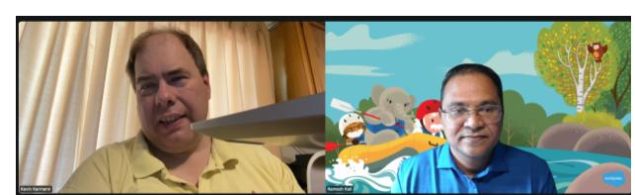
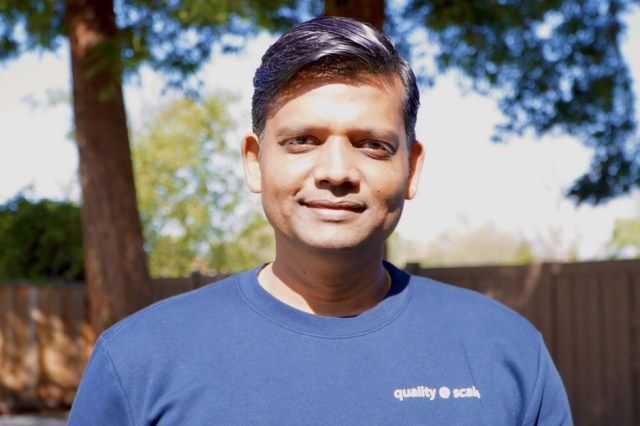
When Elijah Christy and Prashant Vajpayee met through a groundbreaking mentorship program between Salesforce Workforce Navigators and Mentra, they were separated by geography, career stage, and job title. But what they shared—curiosity and a drive to grow—laid the foundation for a uniquely powerful partnership.

Elijah Christy

For Prashant, a seasoned Salesforce Product Manager working on agentic AI initiatives, mentoring Elijah was both a way to give back and an opportunity to deepen his own understanding.

“I’ve worked in tech for a few years but was still struggling with how to advocate for myself in the workplace,” said Elijah, a recent Informatics graduate diagnosed with autism and ADHD as an adult. “This program and Prashant’s help gave me not just skills, but confidence. It showed me I’m not alone.”

“I’ve mentored before, but this experience was completely different,” he shared. “Human connection is what makes mentorship really work.”

Their story is just one example of how this innovative collaboration is reshaping how we think about talent, training, and mentorship in the age of AI.

The Program: A Collaboration Between Salesforce and Mentra

The mentorship program was part of a larger, three-phase initiative launched by Salesforce Workforce Navigators, an internal Salesforce program designed to support jobseekers, and Mentra, a hiring platform purpose-built to support neurodivergent professionals.

Together, they designed a unique pilot model:

  1. Certify: Participants first completed Salesforce’s Agentblazer AI certification, gaining hands-on experience with AI agents and real-world applications of Salesforce technology with the help of assigned mentors.
  2. Mentor: Graduates were then paired with Salesforce employees who are expert in Salesforce, AI, and emerging technologies for one-on-one mentorship focused on AI skill development, career readiness, and personal growth.
  3. Demo: The final phase culminated in a demo day, where mentees showcased AI projects they built—spanning industries like healthcare, agriculture, and education—while honing their communication and presentation skills.

Out of more than 250 interested jobseekers, 29 neurodivergent participants completed the program, with 20 receiving direct mentorship from Salesforce professionals.

“We designed the program to go beyond training,” said Jhillika Kumar, founder and CEO of Mentra. “It’s about building community, fostering self-advocacy, and preparing people to thrive in environments that support them—not just survive in ones that don’t.”

A Mentorship Built on Learning, Structure, and Shared Growth

From the very beginning, Elijah and Prashant clicked. Their weekly check-ins became a space not just for learning agentic AI, but for honest conversation and collaborative problem-solving in the AI and emerging technologies landscape.

Prashant Vajpayee

With the help of professional experience and technical expertise of Prashant, Elijah worked on professional development skills—crafting a compelling LinkedIn presence, refining interview techniques, and articulating strengths in ways that employers could understand and value. Then came the real challenge: building a functional AI project.

With Prashant’s guidance and motivation, Elijah learned Agentforce skills to implement Agentforce with third party applications and took on the ambitious task of designing a customizable AI agent framework using Salesforce tools and APIs. His goal was to create a chatbot that could be adapted across industries, with features that could handle compliance requirements and different user needs.

“It helped me tie everything I’ve learned in tech together,” Elijah explained. “I built a general framework that could be used for anything from healthcare to retail. It was one of the projects selected for Mentra demo day. That hands-on experience and demo to a larger audience was invaluable.”

Prashant served as coach, sounding board, and technical guide—always encouraging Elijah to push further while offering empathy and flexibility.

“Eli was so engaged—punctual, flexible, and always ready to learn,” Prashant recalled. “He wasn’t just learning about AI. He was building something meaningful with it. And that was inspiring.”

AI as an Enabler for Neurodivergent Talent

For Elijah, the technical growth was real. But so was the transformation in confidence. One of his biggest breakthroughs came not from code, but from clarity.

“In a previous job, I struggled with onboarding because nothing was documented. I ended up creating the documentation myself and eventually helped reduce onboarding time by over 100%. But I didn’t know how to talk about that,” he said. “This program and Prashant’s mentorship helped me turn that into a story—something I can proudly share with future employers.”

Prashant mentioned that it is important to understand their perspectives. He also sees AI as an enabler.

“AI is changing how we work. But it should also change who gets to participate,” he said. “People with disabilities or communication differences often get left out. This program proves they shouldn’t be.”

From Individual Impact to Systemic Change

What makes this program unique isn’t just the skills—it’s the structure: a phased approach that blends certification, mentorship, and demo-based storytelling. Participants choose their own AI project topics, often tied to passions like mental health, agriculture, or education.

“There’s something really powerful about seeing someone in your dream job and learning directly from them,” Jhillika said. “We created synergy—Salesforce provided effective mentors like Prashant, and Mentra brought the talent and the structure. It made for meaningful, lasting interactions.”

The results speak for themselves. Many mentees, like Elijah, have stayed in touch with their mentors and are continuing to build on the momentum. Mentors, in turn, are rethinking how they approach inclusion in their own teams.

Looking Ahead: Building Towards an AI Future

Elijah describes himself as proud to be an Agentblazer—early adopters of the Salesforce AI ecosystem. He sees it not just as a certification, but as a mindset.

“It feels like being one of the first people to use Facebook or buy Bitcoin. You’re ahead of the curve. You can feel it.”

When asked what he’d say to a Salesforce leader in 30 seconds, his answer was simple: “This program changed how I see my work. Prashant was a patient, supportive, and experienced mentor who helped me in the areas I struggled in. Even though I’m not a Salesforce employee, it gave me tools I use every day. And it should be shared widely—because it works.”

Final Takeaway: The Power of Human Connection

At its core, this collaboration wasn’t just about technology or training—it was about people. It was about recognizing that potential exists everywhere and showing people what’s possible with mentorship.