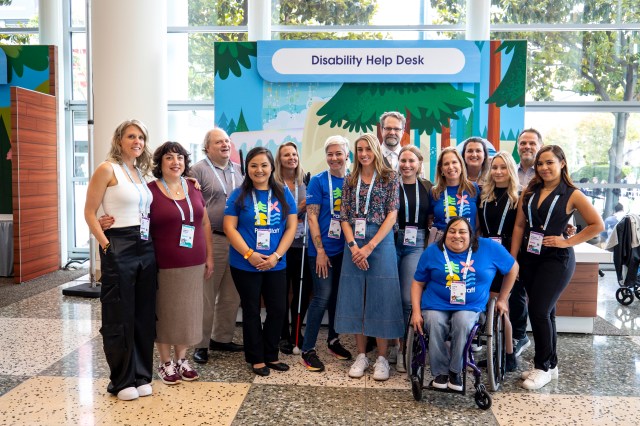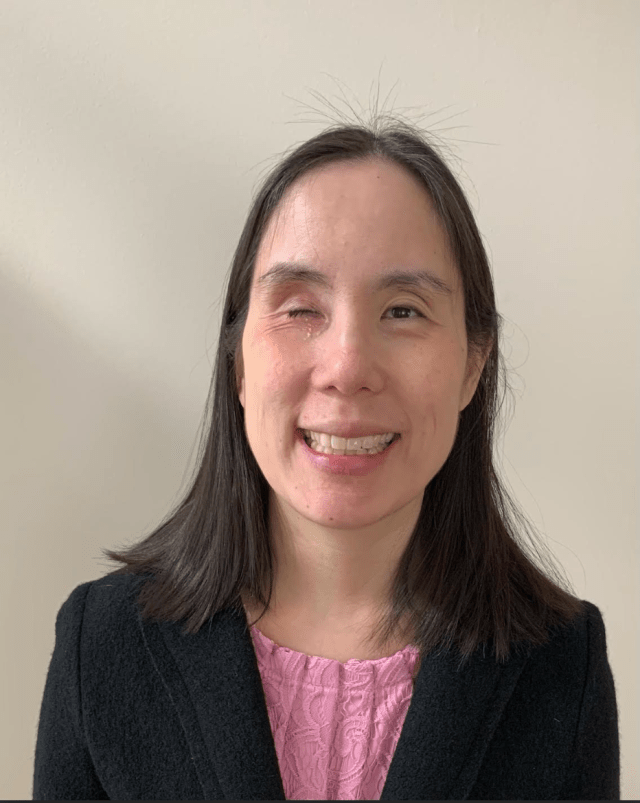
Liz Choi was searching for a pathway into the Salesforce ecosystem when she joined Blind Institute of Technology (BIT) in 2022.
Instead, she found something much bigger: Accessible training designed to support learners with disabilities through inclusive materials. Assistive technologies. Flexible learning experiences. And a hands-on mentorship from Salesforce professionals that connected her to a community invested in helping her succeed.
“It was great to have the opportunity to connect with people who actually worked at Salesforce and really take advantage of everything they offer through Workforce Navigators,” Choi said.
After completing BIT’s Salesforce Administrator course and earning her certification, Liz entered BIT’s apprenticeship, where she spent more than three years building real-world experience. Along the way, she participated in two versions of the Salesforce Workforce Navigators mentorship program, worked directly with Salesforce professionals, strengthened her interview skills, and expanded her professional network.
Today, Liz holds certifications including Salesforce Administrator, Salesforce Business Analyst, and Agentforce Specialist – and continues pursuing opportunities within the Salesforce ecosystem.
Her story reflects the larger mission behind the partnership between Blind Institute of Technology (BIT) and Salesforce Workforce Navigators: Creating accessible pathways into meaningful technology careers for professionals with disabilities.
Building Accessible Career Pathways Together
Workforce Navigators, a program within Salesforce’s Office of Accessibility, helps expand those opportunities through certification vouchers, accessibility accommodations, mentorship, networking, and career-readiness support.
Blind Institute of Technology (BIT) prepares learners for careers in technology by providing Salesforce training, professional development, and paid apprenticeship opportunities. Students complete a structured learning journey that includes self-paced coursework, intensive live training cohorts, hands-on projects, mentorship, and real-world simulations designed to mirror actual Salesforce environments.
BIT currently offers training for certifications including:
- Salesforce Administrator
- Salesforce Foundations
- Agentforce Specialist
- Platform App Builder
- Salesforce Business Analyst
“We don’t just teach to pass the test,” said BIT Academy Director Elliott Natale. “We teach students how to do the job.”
The partnership between BIT and Workforce Navigators is focused on helping professionals with disabilities move from training to employment through accessible education, mentorship, certifications, and real-world experience. Together, the organizations help remove barriers that can make entering the tech workforce difficult, while creating more inclusive pathways into Salesforce careers.
Addressing the Bigger Challenge: Access, Equity, and Employment
Throughout conversations with BIT staff, apprentices, and mentors, one message came through clearly.
“For our community, it’s not a lack of ability — it’s a lack of opportunity,” said Kristy Schenderlein, Vice President of Operations at BIT.
Transportation challenges, inaccessible training environments, hiring bias, and limited professional networks can all make it harder for professionals with disabilities to break into tech careers — even when employers are looking for their skills.
BIT and Workforce Navigators are working to close those gaps.
Through the mentorship program, apprentices are paired with Salesforce professionals who provide support around resume building, interview preparation, networking, and career exploration within the Salesforce ecosystem.
For Liz Choi, the experience was transformative.
“The mentorship program made me feel confident enough to start putting job applications out there,” she said.
The partnership also helps remove financial barriers through certification vouchers provided by Workforce Navigators.
“The financial support really makes this possible,” Elliott explained.
Beyond certifications, BIT’s paid apprenticeship program helps address another major challenge in tech hiring: the experience gap. Apprentices spend one to two years gaining hands-on experience working on Salesforce administration, accessibility, and consulting projects while building communication, leadership, and workplace readiness skills.
Taylor Sone, BIT’s Apprenticeship Program Manager, said one of the biggest benefits of the mentorship experience is the outside perspective apprentices receive from Salesforce professionals.
“Those who have gone through the career hunting process themselves and landed something within the Salesforce ecosystem are able to provide that direct, recent experience,” Taylor explained.
The competency-based apprenticeship program gives participants practical experience in Salesforce implementations, user training, accessible design, documentation, and consulting work. This helps apprentices build both technical confidence and professional experience before entering the workforce full time.
Just as important, BIT is focused on making sure people with disabilities (PwD) are an integral part of decisions for AI fluency – such as the launch of AI programs to company-wide implementation efforts. By leveling the playing field for all employees, inclusive communications brings awareness to issues affecting PwD. It is an important reminder that accessibility is an intentional collective effort and can set the standard for an inclusive workplace.
Why Salesforce Invests in Accessibility — and What Comes Next
One theme surfaced repeatedly throughout the interviews: Salesforce’s commitment to accessibility feels deeply embedded into both its products and its culture.
“Accessibility isn’t just an initiative at Salesforce — it’s the way Salesforce operates,” Schenderlein explained.
That commitment shows up through accessible product design, mentorship opportunities, dedicated accessibility teams, and the work of the Office of Accessibility. For BIT leaders and apprentices alike, it creates confidence that accessibility is a long-term value within the Salesforce ecosystem.
“It’s not just, ‘Here’s what’s new,’” Schenderlein said. “It’s, ‘Here’s what’s new, and we’re bringing everyone with us.’”
BIT is helping apprentices build the skills and confidence they need to navigate these changes within the workplace in the agentic era. That culture of inclusion is helping drive the next phase of the partnership between BIT and Workforce Navigators, including expanded mentorship opportunities, additional certifications, trainings with tools like Agentforce and more pathways into employment for professionals with disabilities.
Combined with BIT’s mentorship and hands-on experience with Agentforce can help apprentices feel more prepared for what’s next. Ultimately, the partnership is about expanding access to opportunity and creating pathways where professionals with disabilities can fully participate, contribute, and thrive.
At the center of the work is a shared belief that accessibility and inclusion make organizations stronger — and that people with disabilities represent an enormous pool of untapped talent. Together, BIT and Workforce Navigators are helping prove that when accessibility is built into education, mentorship, and hiring from the start, it creates stronger opportunities not just for individuals, but for the entire tech industry.

![[Alt text: A woman sits at a desk with her laptop open. A blue screen floats between her and the laptop, displaying a live class, course materials, and an assessment in one place.]](https://workforcenavigators.salesforce.com/wp-content/uploads/2026/09/AI-for-Higher-Education-Image.jpg?w=512)