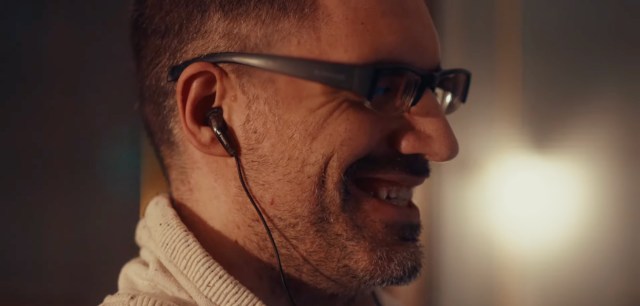
In 2020, Ertay Shashko was searching for a way back into technology.
He had earned a degree in computer science and engineering and worked as a mobile application developer before losing significant vision in his mid-twenties because of retinitis pigmentosa. With few local support services for adults in North Macedonia, Ertay taught himself to use a screen reader. When he was ready to return to work, employers often saw his disability before his experience.
Then a Reddit post changed his career. Blind Institute of Technology (BIT) was offering a remote, accessible Salesforce administrator course. Ertay completed the training, earned his certification, joined BIT as an intern, and was later hired.
Today, he is a Senior Salesforce Project Lead at BIT. He leads a delivery team that has completed more than 30 projects, architects solutions, manages client relationships, and mentors apprentices.
“Our goal with this film was to show that we can actually do the job,” Ertay said. “All we need is an opportunity to show what we can do.”
His experience anchors a new film produced for Blind Institute of Technology by BBC StoryWorks Commercial Productions. It tells a larger story: talented professionals with disabilities can thrive in technology when barriers to training, certification, and employment are removed.
Building an accessible pathway to employment
Salesforce Workforce Navigators and BIT bring complementary strengths to a shared goal: helping people with disabilities build careers in the Salesforce ecosystem. BIT contributes accessible training, expertise serving the disability community, and a registered apprenticeship model tied to workplace experience. Salesforce contributes an accessible enterprise platform, recognized credentials, mentors, and connections across its ecosystem.
Together, they connect scholarship support, certification preparation, professional development, and mentorship with paid apprenticeships and employment opportunities. Accessible instruction supports independent learning, certifications validate knowledge against recognized standards, and mentors help participants build professional networks. The pathway creates access without lowering the bar. It gives participants an equitable opportunity to meet it.
BIT apprentices work 20 hours per week on real projects and receive feedback from experienced project leads. According to BIT founder and Executive Director Mike Hess, Salesforce has already hired apprentices from the program into full-time roles. The organizations have also supported 200 Salesforce certifications across 13 countries and four continents.
“It’s one thing for them just to be supportive,” Hess said. “They’re committing full-time employment spots for these individuals. That’s amazing.”

Hess, a Salesforce Golden Hoodie recipient, has been blind since birth and spent roughly two decades in technology before founding BIT to create a wider path for other professionals with disabilities. As he put it, “People with disabilities are just omitted from talent conversations. Tech is the greatest equalizer.”
That emphasis on capability and measurable results shaped the story Hess and BIT wanted BBC StoryWorks Commercial Productions to tell through the film.
Accessibility that strengthens talent and business
For Shashko, accessibility determines whether he can build, collaborate, and lead independently. Using a keyboard and screen reader, he can work with Salesforce’s back-end tools, including Flow Builder. When a different automation platform required mouse-based drag-and-drop interactions, he had to partner with a sighted colleague, adding resources to the project.

By showing Shashko at work, the film makes the value of accessible technology visible—not as theory, but as everyday professional capability. “People with disabilities are natural problem-solvers,” he said. “We need to be organized. We need to be adaptive.” Those are valuable professional skills.
Accessibility is also an ongoing commitment. Shashko points to artificial intelligence as one example: AI tools can translate visual diagrams and charts into text, giving blind professionals more independent access to information.
The same practices that enable Shashko to do his best work can help organizations broaden their talent pipelines and improve their products. Accessible recruiting, compatible workplace technology, mentorship, and opportunities to advance and lead bring more skilled professionals into the workforce. Different perspectives can strengthen problem-solving, reveal product barriers, and improve customer and partner experiences. Accessible design often makes products and workplaces better for everyone.
Build an ecosystem where talent can thrive
The Salesforce and BIT collaboration offers a practical model for action: begin with accessible technology, pair it with rigorous training and recognized credentials, add mentorship and paid experience, and connect participants to meaningful roles.
Shashko’s experience reflects a broader reality: skilled professionals with disabilities are ready to contribute. By bringing that reality to a global audience, the film invites more organizations to recognize the talent already within reach. Talent is abundant. However, opportunity and access are not always distributed equally. Building more accessible pathways will allow more professionals to contribute, advance, and lead.
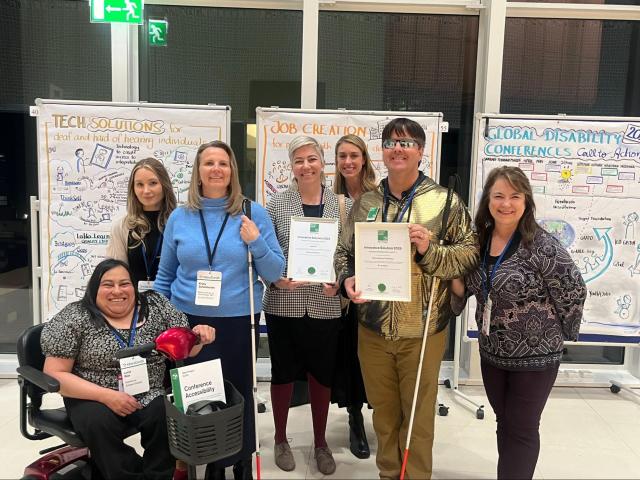
![[ALT TEXT: Left to right: Lime Connect Connect CEO Susan Lang, Workforce Navigators Senior Analyst Lucia Rios, and Salesforce Senior Manager for Accessibility Innovation and Workforce Programs Ally Green]](https://workforcenavigators.salesforce.com/wp-content/uploads/2026/05/image.jpeg?w=640)
![[Alt text: A woman sits at a desk with her laptop open. A blue screen floats between her and the laptop, displaying a live class, course materials, and an assessment in one place.]](https://workforcenavigators.salesforce.com/wp-content/uploads/2026/09/AI-for-Higher-Education-Image.jpg?w=512)